Beverly’s Special Committee on Deficit Reduction told residents at its first community meeting that changing how much city employees and retirees pay toward health insurance could save the city up to $3.5 million a year, that doubling downtown parking rates could bring in another $400,000, and that metering 180 spaces along Lothrop Street from Independence Park to Dane Street Beach could raise between $470,000 and $1.8 million. The committee also listed a Proposition 2 1/2 override, which it said could go on the November 2027 municipal ballot, among the options it is studying.
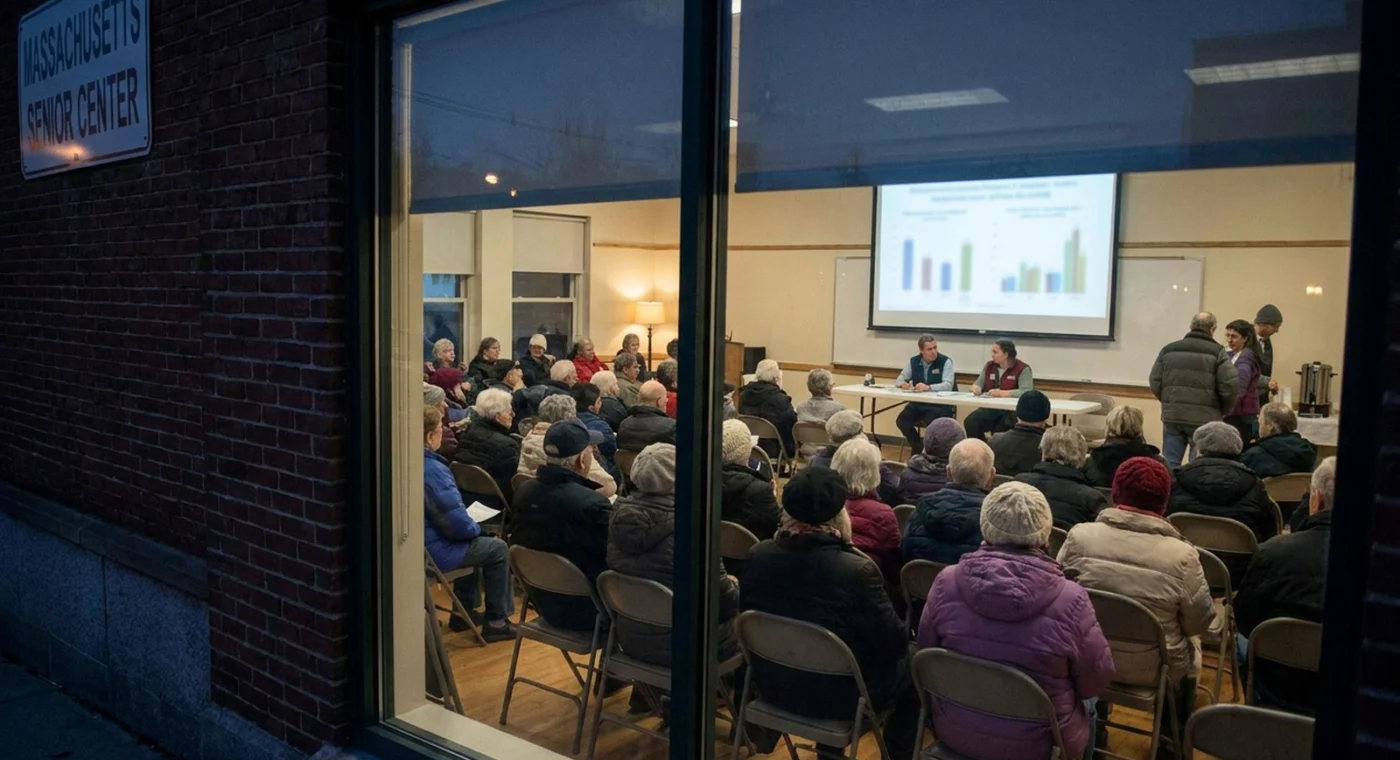
The meeting was held Tuesday, October 20 from 6 to 7:30 p.m. at the Beverly Council on Aging. The city has since posted the committee’s 31-page presentation on its Agenda Center, and this account is drawn from that document. The committee was careful to describe its role: it is a volunteer body that gathers information and makes recommendations, and “decisions regarding policy are made by the appropriate governing and decision-making bodies.” Each idea was presented with a proposal, an estimated financial impact, timing, considerations and next steps, and in several cases the next step is simply to add the item to a list of recommendations for the City Council and the mayor.
How the committee came to be
Councilors Kathleen Feldman of Ward 5 and John Mullady, an at-large member, proposed the committee in January 2026 and the City Council approved it. Its goals, as stated in the presentation, are to examine ways to increase budget flexibility and operational efficiency, assess the effect on residents and services, explore more revenue, and find best practices in comparable communities. The council approved the appointments on June 15 after an advertised application process, and the committee began work on July 20. It meets twice a month.
The members are Lydia Ames, Christine DePalma, Dan Hughes, Mark Munoz, Feldman and Mullady as the council’s representatives, and School Committee members Madeline Lennox and Kaarin Robinson. Members took the lead on researching individual ideas, talking with city staff, other municipalities and state Representative Hannah Bowen about the state budget process, and benchmarking against 26 municipalities identified by city staff. The committee said it has “an approach to leave no stone unturned.”
Health insurance: the largest numbers on the table
The biggest estimates in the presentation came from Hughes and concern employee and retiree health insurance. The city now pays 80 percent of premiums and employees 20 percent. Moving active employees to a 70/30 split would save about $1.5 million a year, the presentation says, and “brings Beverly in line with surrounding communities,” but any change has to be negotiated with each union; contracts are renewed in 2027. Bringing retirees to the state minimum of a 50/50 split, from the 80/20 Beverly still pays, is estimated at $2 million a year and would need to be proposed by the mayor and approved by the council. A third option, leaving self-insurance to join the state Group Insurance Commission or the Massachusetts Interlocal Insurance Association, is estimated at $400,000 to $1.6 million if cost sharing changes with it, at the price of less control over the trust’s investments.
Hughes also presented a pension idea, level-loading the city’s pension payment until the statutory funding requirement is met, which has no long-term cost but reduces the cash needed each year; the presentation notes that market performance has allowed the city to keep its pension payment flat until 2030. A proposal to move the city’s civilian dispatch to the Middleton regional dispatch center was estimated at $400,000 to $600,000 in savings but is at least two years off, because Middleton has no capacity now and would have to expand.
Parking, harbor, airport and other fees
Munoz presented the revenue ideas. The current $1 an hour parking rate brings in about $400,000 a year; raising it to $2 could double that. Parking enforcement costs about $180,000 a year and violations bring in about $275,000. The presentation says the effect on downtown businesses would need to be understood, and suggests a parking benefit district as a way to return some revenue to the downtown. Adding meter zones on Lothrop Street between Independence Park and Dane Street Beach, with enforcement from 8 a.m. to 8 p.m., was estimated at $470,000 to $1.8 million a year for 180 spaces. If payment is by app only, signs and zones are all that is needed to start; kiosks cost about $14,000 each and take longer to order and install.
Harbormaster fees bring in about $125,000 a year, mostly from moorings. The mooring fee is $7 a foot, raised from $5.50 last year after at least a decade without a change; each additional dollar would add about $15,000 to the general fund. The waitlist for a mooring is about 100 names and three to five years long. For comparison the presentation lists Salem at $7, Danvers at $5 and Marblehead at $13. Two harbor ideas went nowhere: the Beverly Golf and Tennis Club is run by an outside company for a flat fee that stays in its enterprise fund, with a contract through 2029, and Glover Wharf revenue stays within the Beverly Harbor Management Authority, which the state created outside city government. Mullady’s proposal to raise landing and refueling fees at Beverly Airport has no estimate yet and would need discussion with the Airport Commission; the money would go to the airport enterprise fund. Munoz also proposed a formal schedule for the council to review all city fees, possibly as part of the annual budget review.
Charging for the parks program
Ames presented two recreation ideas. The free summer parks program registered 753 children in 2026 with about 288 attending daily. A $20 registration fee would generate about $15,000; a $2 daily fee about $23,000; a $5 daily fee about $57,000. The presentation notes that converting a drop-off park into a day camp requires staff aged 19 and older and bathroom access, which not every park has, and asks how fees would affect enrollment. The paid Endless Summer day camp at Lynch Park grew from 30 participants in 2025 to 50 and a waiting list in 2026 and brought in $14,000, about $280 a child; the committee suggested expanding it at Lynch Park or adding a camp at Ober Park, with questions about whether Ober has the facilities.
PILOTs, services, electricity and the state
Robinson presented a plan to seek larger multi-year voluntary payments from Beverly’s tax-exempt institutions through what the presentation calls a community partnership initiative, citing Boston’s program, which asks for 25 percent of what the institutions would pay in taxes. No revenue estimate was offered; the next steps are to confirm current contributions and property values, continue the tax-exempt property research with city staff, follow up with Representative Bowen on earlier Beverly PILOT work and arrange introductory meetings with institutional leaders, aiming at the fiscal 2028 budget. Lennox added services in lieu of taxes, such as student teaching, Beverly High internships, workforce development, affordable youth hockey ice time and access to facilities, with the caution that such services “may not directly reduce city spending” and need measurable value.
Mullady proposed studying a municipal electric company, which would require buying out National Grid’s local system and setting up a light board; the presentation says the savings would go to residents through lower rates and the first step would be council funding for a feasibility consultant. Ames summarized the state’s Chapter 70 school aid formula, under which Beverly is a “minimum aid” community along with about half the state, and noted a committee forming in 2028 to recommend changes; the governor’s proposed one-time aid payment “is currently stalled.” DePalma presented a Center for Hard-to-Recycle Materials for electronics, mattresses, textiles and batteries; the city is applying for start-up grants, and there is no other funding for it.
The override option
Ames presented the Proposition 2 1/2 override as “something that could be voted on in the future” by Beverly residents, with the amount to be determined and the timing as early as the November 2027 municipal election. The presentation says the purpose would have to be made very clear, that exemptions are possible for a property value threshold or financial hardship, and that the next steps are to research overrides in surrounding cities and use the state’s tax impact calculators to estimate the effect on residents.
Still being studied
The committee listed ideas it has begun to look at without estimates: shared regional services, an audit of the city’s non-health insurance, an audit of school efficiencies, the potential sale of Hurd and/or Cooney fields, the city vehicle and personal use policy, pet waste composting and other ways to reduce trash, and more cannabis retail within what zoning already allows.
The committee said it will review the feedback from the meeting, plan further community meetings this fall and winter, possibly as focus groups or listening sessions, and publish dates and locations. Residents can contact committee members or the two council representatives with questions. The presentation ends with a draft schedule and a question period; the record posted by the city does not include the questions asked or the answers given that night.