Salem has finished half of the 30 actions it set for itself in its five-year housing plan and has not begun six of them, the city said Monday, November 9, in a report card issued with one year left on the plan’s clock. The same report shows how tight the market remains: the vacancy rate is 2.6 percent for rentals and zero for owner-occupied homes, the average rent is $2,196, and the share of households paying more than 30 percent of their income for housing has not moved from 42 percent.
The city adopted the Housing Roadmap in December 2022. It doubles as Salem’s state-approved housing production plan, which expires December 4, 2027. The mayor’s office said about 75 percent of the plan’s timeframe has now passed.
The score: 15 done, nine under way, six untouched
Of the 30 strategies, 15 are complete, nine are in progress and six have not started, according to the city’s release. The release names four of the completed items: rules on condominium conversions are in place, inclusionary housing rules have been established, the city’s housing rehabilitation program has been supported, and a housing stability position has been created in the mayor’s office. It does not list which six strategies have not started, and the announcement posted on the city’s website does not link to a full item-by-item scorecard.
The city’s Imagine Salem planning site fills in part of the picture. It lists five housing measures as implemented: inclusionary zoning, a change to residential parking minimums for multifamily housing, the condominium conversion ordinance, accessory dwelling units and the Housing Development Incentive Program. It lists three as in process: linkage or transfer fees, zoning for single-room occupancy, co-living and efficiency housing, and smart growth districts under Chapter 40R.
“We’ve made good progress on many of the strategies called for in our current Housing Roadmap, and we’re seeing benefits from those actions, but there’s certainly more to do,” Mayor Dominick Pangallo said in the release. “We continue to believe that everyone in Salem deserves a roof over their head, and one that they can afford.”
Prices, rents and a market with almost nothing open
The report card puts the plan’s progress against the market it was written for. Between 2022 and 2026, the city said, the median sale price of a single-family home in Salem rose 13 percent and the median condominium price rose 14 percent. Average rents rose about 10 percent, from $2,000 in the first eight months of 2020 to $2,196 in the same months of 2026.
Vacancy is the number that explains the rest. The city said a healthy market has a vacancy rate of about 6 percent for rentals and about 2 percent for owned homes. Salem’s most recent figures are 2.6 percent for rentals and zero for owned homes. “When vacancy rates are low, it indicates there is not enough supply, which then drives up housing costs,” the release said.
Rental buildings also continue to be converted to condominiums. The city said conversions peaked at 107 units in 2022 and that the pace has remained steady since. As of 2024, the most recent measure, Salem’s housing is split evenly, 50 percent owner-occupied and 50 percent renter-occupied.
The share of cost-burdened households, defined as those paying more than 30 percent of income for housing, was 42 percent in 2022 and 42 percent in 2024.
What has been approved, and what has been built
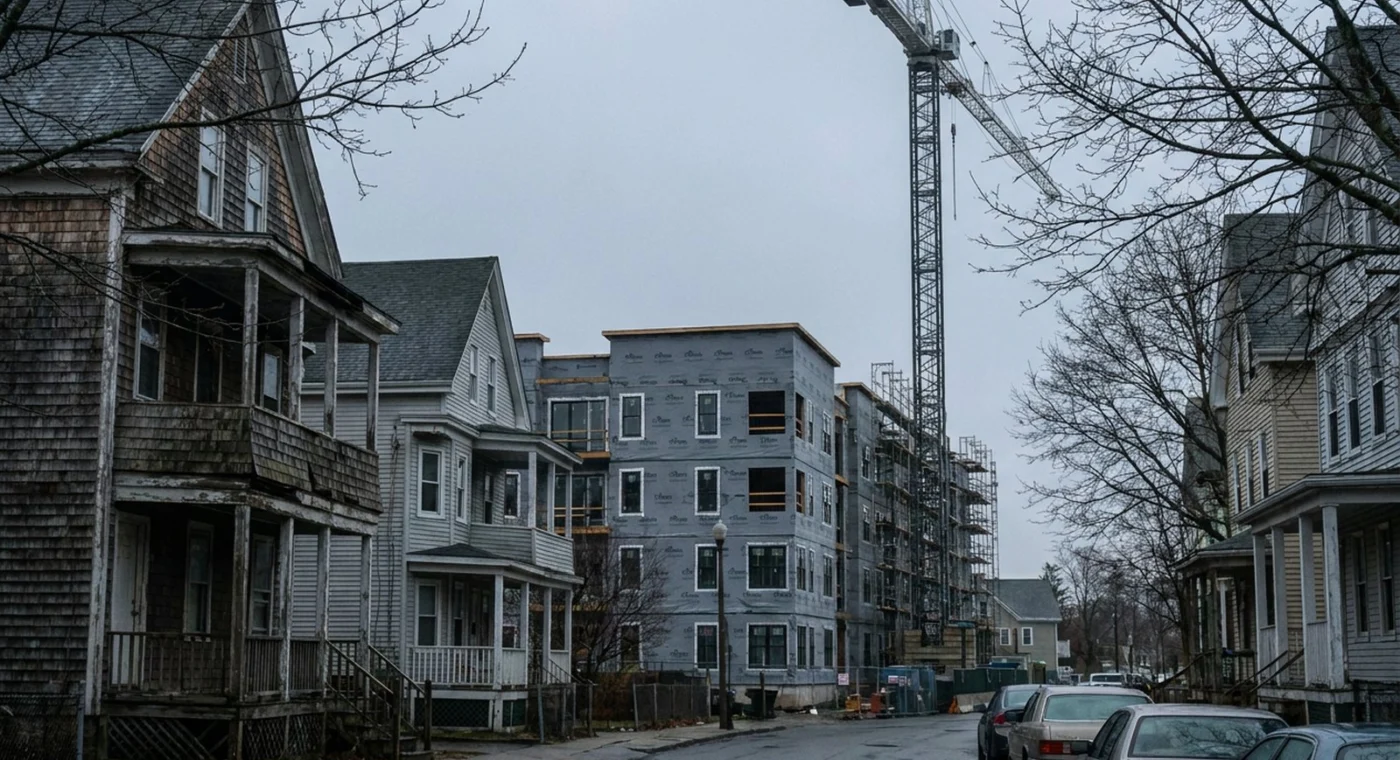
The release gives two sets of production numbers. From 2019 through 2022, the city approved 432 housing units, of which 220, or 51 percent, are affordable. Of those, 144 have been built, 251 are under construction and 37 have not started.
From 2023 through 2026, the count is 1,815 units approved or in the pipeline, of which 612, or 34 percent, are affordable. That total includes 690 units the city expects to enter permitting within the next year. Of the remaining 1,125 units that are approved, 17 have been built, 473 are under construction and 635 have not started.
Put together, the two periods show a city that has approved far more housing in the last four years than in the four before, and one where most of it is not yet lived in: 161 finished units out of 1,557 approved since 2019, with 724 under construction.
What the Roadmap asked for
The 2022 Roadmap, a 124-page document, set eight goals in three groups. The overarching goals are to preserve existing affordable housing and protect renters from displacement, to protect and create homes for the city’s most vulnerable residents, and to expand the supply of market-rate, mixed-income and affordable housing. The location goals direct growth toward areas with jobs and transit and name the Salem State University South Campus, the Jefferson Avenue area, Shetland Park and Highland Avenue as “transformative areas.” The remaining goals cover infill in existing neighborhoods, climate resilience and the rehabilitation of older buildings.
Its 30 strategies are sorted into four categories: stability, supply, municipal subsidy, and implementation capacity and outreach. They range from the condominium conversion ordinance and stronger tenant protections to a study of residential parking minimums, zoning for small efficiency units, a possible real estate transfer tax on high-end sales, a community land trust, a centralized housing lottery, a permanent housing stabilization office and a rental registry to track rents and evictions. The first strategy on the list was to consider rent stabilization if the state allows it.
The plan was candid about its limits. “The intent of these strategies is not to suggest that Salem will implement all these strategies over five years, but to offer multiple ways that the community can work to achieve its goals,” it says, adding that many depend on the market, on funding and in some cases on state approval.
Voices from City Hall
Lori Stewart, the city’s housing stability coordinator, said in the release that the answer has to be twofold: more housing across Salem and stronger protections that keep tenants housed. “Behind every housing statistic is a person, a family, or a senior wondering whether they will be able to remain in the community they call home,” she said.
Dr. Thomas Piñeros Shields, vice chair of the Affordable Housing Trust Fund Board, said the board continues to work on priorities from the Roadmap, “such as the feasibility of community land trusts and zoning amendments to support single-room occupancy or efficiency housing in Salem.”
What happens next
The state’s approval of the Roadmap as Salem’s housing production plan runs through December 4, 2027. The release does not say when work on a successor plan will begin or which of the six unstarted strategies the city intends to take up in the final year. The Roadmap itself notes that every strategy requires local approvals, and the items Imagine Salem lists as in process, including zoning for single-room occupancy and efficiency housing, have not yet been adopted.
The city’s announcement is here. The 2022 Housing Roadmap is here, and the city tracks individual strategies on its Imagine Salem housing page.